
IMV
Invasive Mechanical Ventilation (IMV) Strategies Domain

What is this study about?
The primary objective for the domain is to identify the invasive mechanical ventilation strategy that most effectively improves patient outcomes among a range of strategies including best conventional mechanical ventilation.
Why is this study important?
This study is important because it addresses a major unresolved problem in critical care: how to provide invasive mechanical ventilation that supports breathing while minimizing harm to the lungs and diaphragm in patients with acute hypoxemic respiratory failure (AHRF), including ARDS and severe respiratory illnesses.
Patients with AHRF often require mechanical ventilation to survive, but ventilation itself can cause injury:
-
Ventilator-induced lung injury (VILI) can occur when mechanical ventilation overstretches damaged lungs, worsening inflammation, organ failure, and mortality.
-
Traditional lung-protective ventilation often requires deep sedation to suppress breathing effort. While this protects the lungs, it can lead to ventilator-induced diaphragm dysfunction (VIDD), causing diaphragm weakness and prolonged dependence on the ventilator.
Allowing patients to breathe spontaneously may preserve diaphragm function, but excessive effort can cause patient self-inflicted lung injury (P-SILI) and diaphragm injury.
As a result, clinicians face a difficult balance between protecting the lungs and preserving respiratory muscle function. The optimal strategy remains uncertain.
Study Arms
Driving Pressure-Limited Ventilation (DPL)
-
Tidal volume and positive end-expiratory pressure adjusted to maintain static airway driving pressure ≤15 cm H2O (during passive ventilation) and dynamic transpulmonary driving pressure ≤23 cm H2O (during assisted ventilation)
-
Plateau airway pressure ≤35 cm H2O.

Lung/Diaphragm-Protective Ventilation and Sedation (LDPVS)
-
Ventilation and sedation adjusted to maintain
-
Static airway driving pressure ≤15 cm H2O (during passive ventilation)
-
Dynamic transpulmonary driving pressure <23 cm H2O (during assisted ventilation)
-
Moderate respiratory effort (Pocc –6 to –20 cm H2O)
-
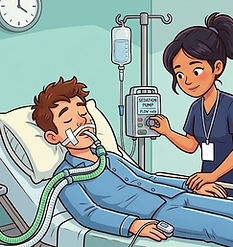
Conventional Lung-Protective Ventilation (LPV) (control)
Participants receive the current standard of care for mechanical ventilation, using established low‑tidal‑volume, lung‑protective settings.
